Rêve Studios · Internal · The Franchisor Playbook
How we grow without spending what makes us rare.
The company’s manual for building and running the Rêve franchise system.
Rêve Studios · Internal · July 2026
Our manual
This is our manual. It tells us how to build the Rêve franchise and how to run it. Everyone on the team reads it. Everyone needs to know what it says.
We are turning Rêve into a franchise. That means owners who are not us will run their own Rêve studios. Those are the decisions only we can make, and we make them before we sign a single owner.
This is the companion to the Franchisee Playbook, the manual we hand each owner. That book tells the owner how to run a Rêve studio. This one tells us how to build the system behind it.
A franchise is a partner channel. That means we hand our system to another owner. They pay to use it. They run their own studio. We support them. So everything here treats it that way. We cover what we require and what we leave to the owner. We cover what we staff to support them. We cover how the system makes money on both sides of the table. And we cover what an FDD and an ops manual really are, once we strip the fear out of them.
Our job is to build the system that lets an owner who is not one of us run a room as well as we do.
One rule sits under every page
The fastest way to kill this brand is to spend the scarcity that powers it.
Scarcity just means a spot at Rêve is hard to get, and that is the whole draw. A franchise built to sell as many studios as fast as possible will spend that scarcity. A franchise built to choose the right owners and protect the room will grow it. This book builds the second kind. Our one asset that no one can copy is a room that fills itself. Everything here protects it.
The first choice most founders get backwards is what to control. We could force every owner to buy our exact machines, our exact mirrors, floors at a set height, windows from one vendor. Then the owner does the math. They find they can buy the same black windows from their local supplier for half of what we would charge. A franchisor who controls everything controls nothing worth controlling. They just tax the owner’s build-out to enforce a look a competitor can order from the same catalog.
For us this runs into a real tension. The fully-specified room drives up the $200,000 build-out. That build-out has to stay low for the franchise math to work. So we cannot control everything. We have to choose. Brands that do not choose on purpose get chosen for.
So we choose on one test. Does this thing make the composed hour and the Method, or does it only make the room look premium?
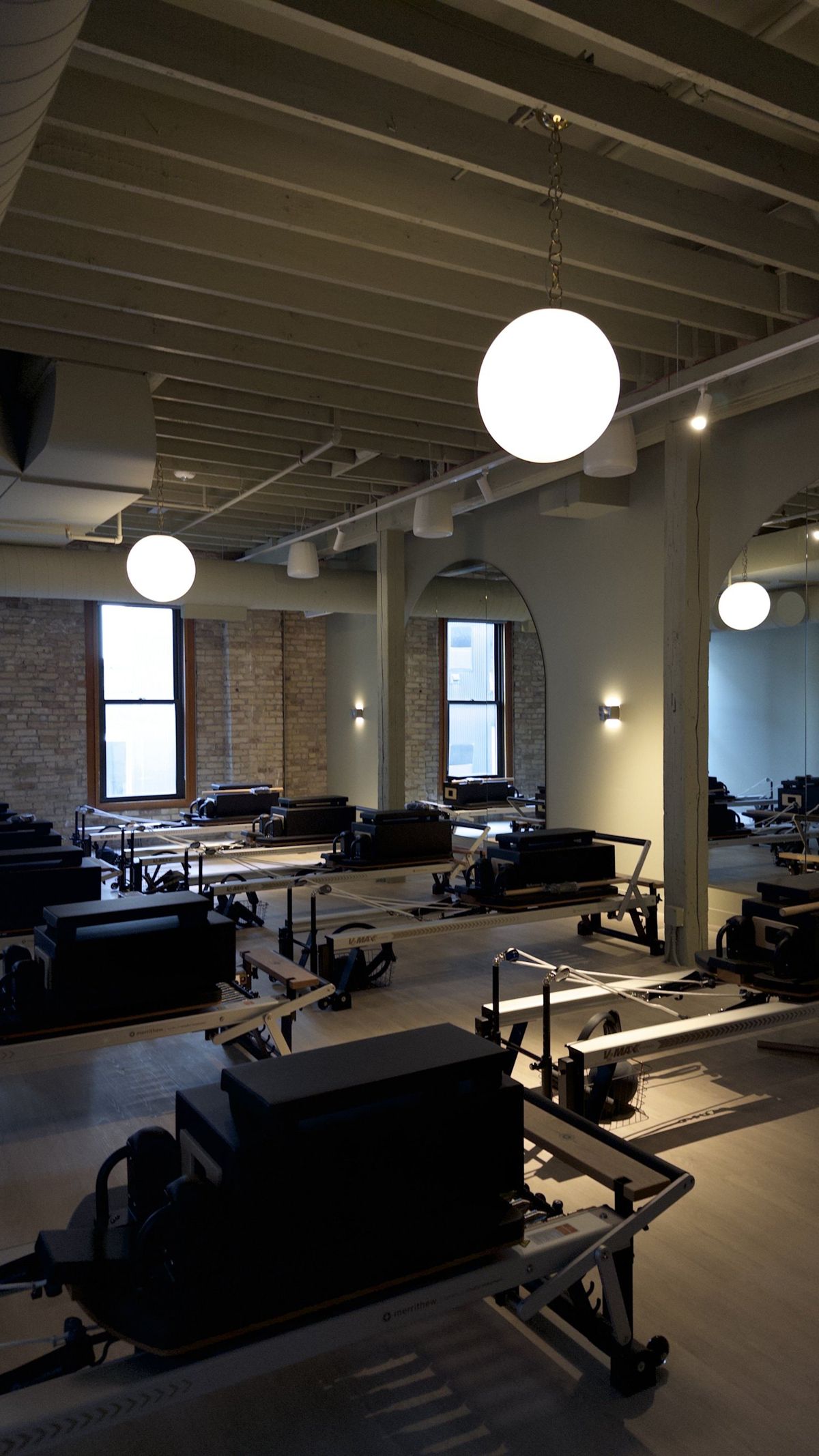
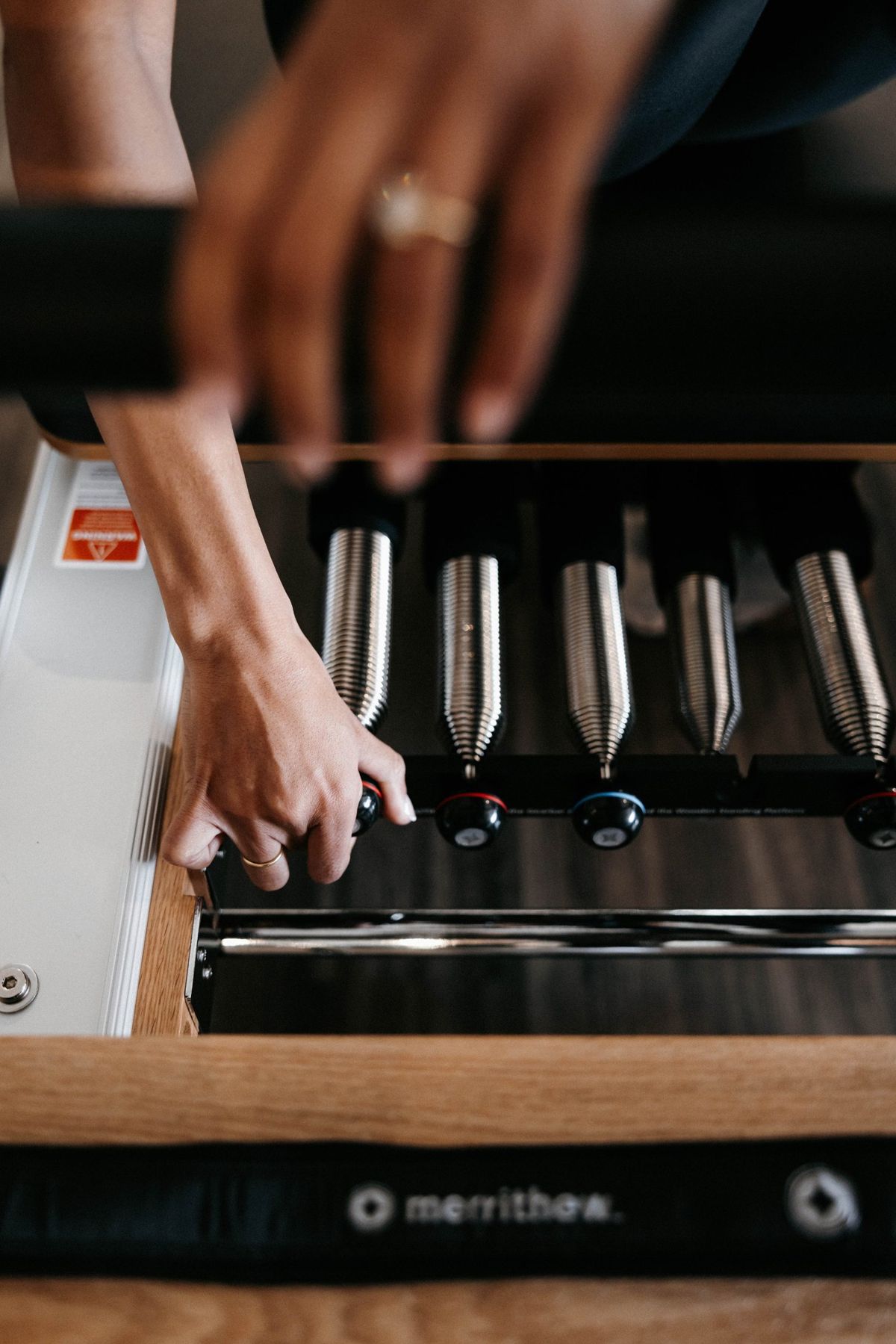
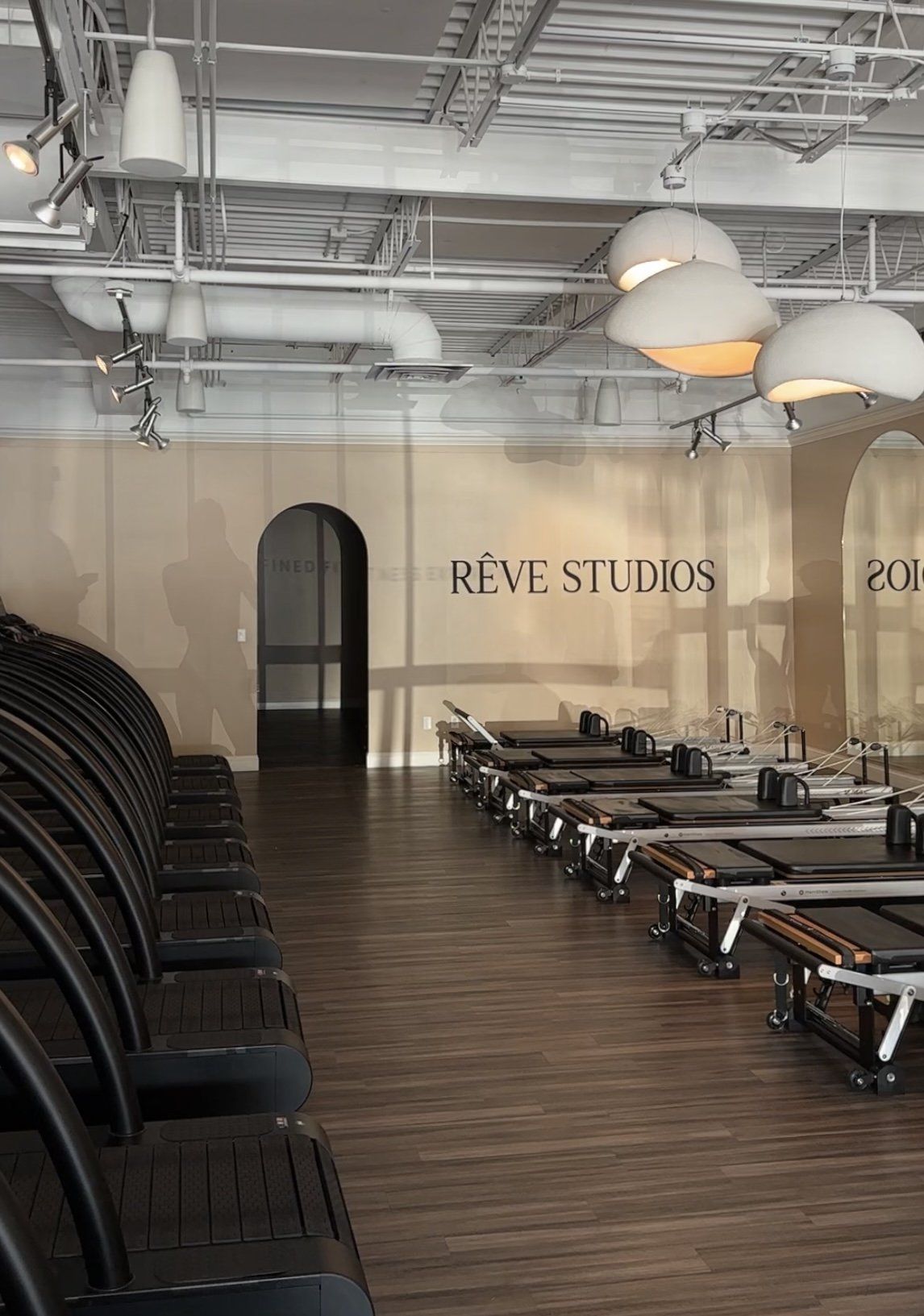
The treadmill and the reformer pass. They make the signature 12/12/8/8 hour and the calibration the Rêve Method needs. We lock them. Because we buy them in volume, they are also a vendor deal, a revenue line, not a cost we eat (see Section 3). The arched mirror does not pass. A third of the high-end market already orders the same arch. Making owners buy it spends the budget to buy a look a rival can copy for the price of a mood board. So we free the mirror shape, the millwork, the floors, the lights, and the finish to the owner’s local sourcing. The $200K holds, and we never touch a minute of the hour a member actually pays for.
| Element | Status | Why it lands here |
|---|---|---|
| The 12/12/8/8 composition, fixed to the minute | Locked | It is the product. A real composition, not a mashup. If it drifts, the hour stops being ours. |
| Woodway treadmill and Merrithew reformer fleet | Locked | The two machines that make the composed hour and the Method’s calibration. |
| The Rêve Method and instructor certification | Locked | The only thing we own that can be taught, certified, and passed on. |
| The founding-member launch plan | Locked | The $0-cost engine. The system the franchise actually buys. |
| The waitlist that rewards time, and the founding-member promise | Locked | Scarcity as a system. Drop it and half our thesis is proven wrong in public. |
| The tech stack (booking, waitlist, digital audience engine) | Locked | Also a real technology fee, not a markup. |
| Mirror shape, arched millwork | Optional | The black windows. Looks premium, does not make the hour. A third of the market owns the arch. |
| Floors, lights, furniture, finishes | Optional | Local sourcing halves the cost without touching the experience. |
| Retail, smoothie bar, extra revenue | Optional | Not the product. The owner decides. |
The discipline is not “control less.” It is control the four things a competitor cannot buy: the composition, the machines that make it, the Method, and the engine. Then hand the owner every dollar of savings on the things that only look expensive. That is how we protect the $200K number and the room at the same time, instead of trading one for the other.
A franchise is not a one-time sale that ends when the owner signs. It is a channel we have to staff. And the staffing answers the hardest question the whole model asks. Our team is great at building community. Will an owner in another state be that good? The support we build is how we make the answer yes.
We send a launch team to the new city. They live there until the studio clears the quality bar we set.
Here is how you make an owner as good as a founder: you replicate yourself. That means we build a system to train people and move them into the new market until the room meets our bar. We send a launch team to the new city. They live there and run the launch beside the owner. They stay until the studio clears the quality bar we set. Almost no brand does this. Because it is rare, we make it part of who we are and put it in our materials. This is not overhead. It is the product’s guarantee, sold as a service.
This points at an honest gap we have to close. The Rêve Method is the only thing we own that can be taught, certified, and passed on, and today it gets one sentence on a webpage. Right now it is a name plus two founders in the room. To support a franchise, it has to exist as documents: a full curriculum and a certification every instructor passes before they teach. That is the Year-2 work. It closes the gap against the biggest chain’s built ~450-hour training system. Until we build it, every new market learns the standard by watching, and watching does not travel. Writing it down is not a nice-to-have. It is what makes the owner in another state as good as Wayzata.
| Support function | What we staff and provide | When it is needed |
|---|---|---|
| Launch support | A launch team that runs the digital audience engine, the founding-member waitlist, and opening day in the owner’s market, and lives there until it clears our bar. | Per opening, Months 0–12 |
| Method certification | A written curriculum plus a certification every instructor passes before teaching, with a recertify schedule. | Year-2 build, then always |
| Community coaching | The community playbook coached in the field: how a new room earns its first hundred members and its first advocates. | Pre-open through Year 1, then quarterly |
| Technology and marketing | The booking and waitlist software, the digital audience engine, and the brand-fund content engine, all run centrally so the owner never runs a paid ad to fill a room. | Always |
| Ongoing check-ins | A named contact per owner: weekly at launch, then a quarterly review that audits the engine, not just the money. | Always |
We staff this before we recruit, not after. If we sign owners and then figure out the support, we have sold a promise the system cannot keep yet. The first owner who finds the gap is also the first reference call the next owner makes.
Most people assume a franchisor’s income is the royalty. A royalty is an ongoing cut of each studio’s sales that the owner pays us. But it is not just the royalty. We make money on franchise fees, technology, and vendor deals too. And one truth sits under every line: every dollar we earn is a dollar the owner pays. Their cost is our revenue. That is not a reason to shrink the ledger. It is the reason to make every line one that an owner’s lawyer will respect. Because the owners we want read the ledger with a lawyer.
The category shows what happens when the ledger is built to sell instead of to defend. In early 2026 the biggest chain’s parent company paid a $17M government settlement for misrepresenting franchise costs, risks, and time-to-open. That is the price of leading with numbers that outrun the receipts. It is also why our pitch never opens on average sales, hands-off ownership, or “territories are going fast.” The money model can be honest and still be good. In fact, honest is the only version that survives the owner’s lawyer.
| Line | What it is | What the biggest chain charges | Our design rule |
|---|---|---|---|
| Franchise fee | A one-time payment for the right to run the system. | $65,000 | Priced to select, not to max out. Set to filter for real belief, not to hit the category ceiling. |
| Royalty | An ongoing cut of the studio’s sales. | 8% | At or below the category’s 8%. We let the promise discipline the owner, not the take-rate. |
| Brand fund | A pooled cut that every owner pays into to fund the shared engine. | 2% | Funds the content engine and the audience engine. Never a paid-ad war chest that spends the scarcity. |
| Technology fee | Pays for the booking, waitlist, and audience software. | Varies by system | The moat as software. A real value line, because the waitlist mechanics are the difference. |
| Vendor deals | Volume pricing on the treadmill and reformer fleet. | N/A | A shared, disclosed margin on the machines we require. We earn on the machines we lock. |
Two of these lines need the most discipline. The brand fund cannot become the thing that buys a new market’s opening-day crowd. The moment a pooled marketing dollar buys a room’s demand, our whole claim dies in public, and it dies for every owner, not just the one who spent it. The technology fee is only fair because our software is not a plain booking tool. It runs the waitlist that rewards time and the digital audience engine that no competitor runs. Price it as value delivered, and the lawyer nods. Price it as a markup, and he flags it. And the owner we most want is the one whose lawyer flags things.
The strategic point sits under the table. The gold rush, the crowd racing to sell the most studios the fastest, makes its money by planting flags and booking the fee. We make our money by selling fewer, better studios that survive, where the royalty compounds for a decade because the room still fills itself in year eight. An honest ledger with a truthful set of numbers is not the modest choice. It is the one thing a big, cynical owner has never been sold, and cannot argue with.
Founders stall here out of fear. To sell a franchise, you have to make an FDD, and that sounds scary. It is not. The FDD, or Franchise Disclosure Document, is the rulebook a franchise must give every buyer by law. It is not a sales pitch. It is all the rules we set for our owners, plus our real financial numbers, or a note that we chose not to share them. It runs about 500 pages. A franchise attorney, a lawyer who does franchises, writes it for about $50,000, and we update it every year. It covers royalties, marketing fees, technology fees, required vendors, optional items, how long the deal lasts, and the rules on how close two studios can be. It is also the document that lets us sell at all.
Two facts do the most work. First, the FDD is not negotiated. The franchise agreement is. The FDD is the same for every buyer, and that sameness is the protection. The franchise agreement is the signed contract for one location, and it has a little room to bend for a stronger owner. Second, the FDD is not the sales material. The FDD protects the brand. The reason an owner picks Rêve over everyone else lives in the sales material: the engine, the playbook, the receipts. Keeping the two apart is what lets the sales story stay a story instead of a legal exhibit.
The one line inside the FDD we treat as a real choice is Item 19. Item 19 is the part of the disclosure where a franchise may show its real financial results. By law we do not have to share our numbers. But leaving Item 19 blank is a red flag. For most young franchises, sharing is a risk. For us it is the opposite. Our numbers are the whole difference. An Item 19 that shows the Wayzata receipts is the credible move: $675K in average yearly sales trending to $1M, 91% monthly retention, $0 cost to get a customer, and 100 founding members at $20K in monthly income banked before opening. It is credible precisely because the gold rush’s numbers are the ones that just cost a competitor $17M. For us, sharing is not exposure. It is the argument.
And the FDD does not stand alone. An FDD requires an ops manual. The ops manual is the living, working how-to book for every owner. For most brands it is boring compliance. For us it is the product: the founding-member launch plan, the Method curriculum, the waitlist promise, and the community system, all written down so an owner can run them without a founder in the room. The playbook is the product. So the ops manual is not the paperwork behind the sale. It is the thing being sold.
| Step | Work | Who owns it | Rough timing |
|---|---|---|---|
| 01 Write the ops manual | The living how-to book: launch plan, Method curriculum, waitlist promise, community system. | Our team | Months 0–6 |
| 02 Draft the FDD | The 23 items, with an Item 19 built on our real receipts. | Franchise attorney (~$50K) | Months 4–8 |
| 03 Register and file | File with the states that require it. | Attorney | Months 6–9 |
| 04 Franchise agreement templates | The per-location contract we can sign. | Attorney | Months 6–9 |
| 05 Sales material (the why-us) | The engine story, kept separate from the FDD. | Our team | Months 3–9 |
| 06 First franchise sale | An owner chosen by our scorecard. | Our team | Month 9+ |
The whole job is about a year of building the manual and the disclosure at the same time. It is not a cost, because the manual we have to write to file the FDD is the same manual that makes the new owner as good as Wayzata. We are not doing legal paperwork. We are writing the product down.
One sentence governs how we recruit. It is, on purpose, the opposite of how the category sells:
We choose operators; we do not sell territories.
The gold rush and the big roll-up chains run on volume: the most flags planted, the fastest, on paid-intro funnels. We run on the opposite. We build a small, brand-first group of chosen owners.
That is not a softer version of the same business. It is a different business. It is the only one whose math survives our governing rule, because every owner we sign either protects the engine or spends it, and volume selection cannot tell the two apart.
The tool for choosing is already built. We have a selection scorecard. We score six things, and we weight love for the brand and discipline about the engine triple. The owner’s operating skill counts second. The scorecard also has one disqualifying question about a half-full waitlist six weeks before opening. We offer no agreement until an owner clears both. The scorecard is not a polite screen. It is the thing that keeps the group a group.
Pacing follows from selection. Our plan is 2 → 12 → 32 studios across the first three years. That curve only survives if selection holds. So we sign the brand-led owners first, the ones who lead with love for the brand and want to buy the engine. We prove the earning travels to a market where a founder is not the local face. Then we use the careful, numbers-first investor’s own checklist as the stress test for everyone else. Do it in the wrong order, and we lose. If we sign the big multi-unit investor first, on his terms, before the engine is proven to travel, we have handed our only moat to the person most tempted to turn on paid ads the first time a room opens slow. The pacing is not caution. It is the speed at which selection can stay honest.
Selection is a two-way test. That is why we lead with our own scar, not a polished record. Our founders built and closed a studio brand before Rêve. A careful investor will find that closure before he reads the sales numbers. So we put it on the table first. An owner who owns a past closure earns more trust than one who hides it. We tell our own history before a prospect finds it.
Choose on those signs and the group compounds. Every owner we add makes the brand more founding, not less. Sell territories to anyone who can fund one, and we have started the gold rush we were supposed to replace.
Everything so far protects one asset: what we control, the support we staff, the ledger, the FDD, and the selection gate. At scale, that protection has to become a standing job, not a founder’s gut feel. The gate is our five-question filter. Every system-level thing passes it before it ships:
More than one no, and we fix it before it ships. As a franchisor we run this filter not on a homepage but on an FDD clause, a brand-fund campaign, and a new market’s opening plan.
In the field, the filter becomes an audit. What we check in each market is not mainly the money. It is the four things that, if they slip, spend the scarcity:
Under the audit sits a tension we cannot leave open. Our mission names an exclusive, high-end clientele. Our vision names a scalable global cult brand of thirty-two studios. Both are true. Both cannot govern at once. Left open, the tension drifts toward the mass-market open door that empties the brand of the thing it sells. The fix is one rule:
Growth adds rooms. It never widens the door.
The cult brand is not a mass audience. It is a growing family of small rooms. Each one stays exclusive. Each one earns its own hundred founding members and its own waitlist.
That settles both statements at once. Every room stays high-end and earned, and there come to be many of them. It is the same discipline used to grow beloved brands without watering them down: few, chosen, proud, one room at a time.
Protection also has an offensive move, and the launch is when to use it. The Method is the moat, and today it is invisible, a name on a webpage. So we make the invisible thing the story. During launch PR, we release a page of the Method coach-training manual on purpose. We engineer it so one paragraph becomes the thing the market argues about. That turns coach training from a cost into earned attention. And it proves the Method is real, written-down work, not just two founders in a room. It is our anti-copy rule on offense: the one thing a competitor cannot borrow, shown on purpose.
What this protects
Build the system that lets the brand be sold thirty-two times without being spent once.
Our job is not to sell the brand. Control the four uncopyable things and free the rest. Staff the launch-team support that makes a new market as good as Wayzata. Earn on an honest ledger a lawyer respects. Write the product down as the manual an FDD requires. Choose owners instead of selling territories. Run the five-question filter as a standing job so scarcity is never quietly cashed in.
Do that, and every new market makes the demand engine stronger. Skip any of it, and Rêve becomes one more logo in the gold rush that just paid $17M to learn the shortcut has a bill.
The word to own, on our side of the table exactly as on the member’s, is earned. A system is the only thing that can earn it at scale.
The Rêve Franchisor Playbook · the company’s manual for building and running the Rêve franchise system. Rêve Studios · Internal · July 2026.